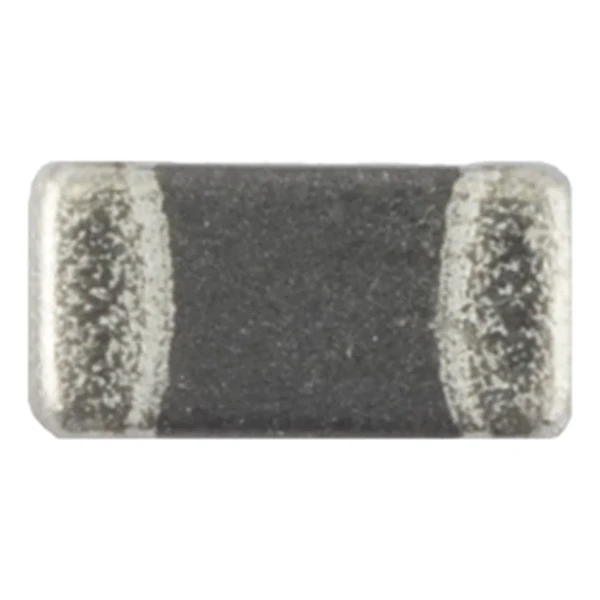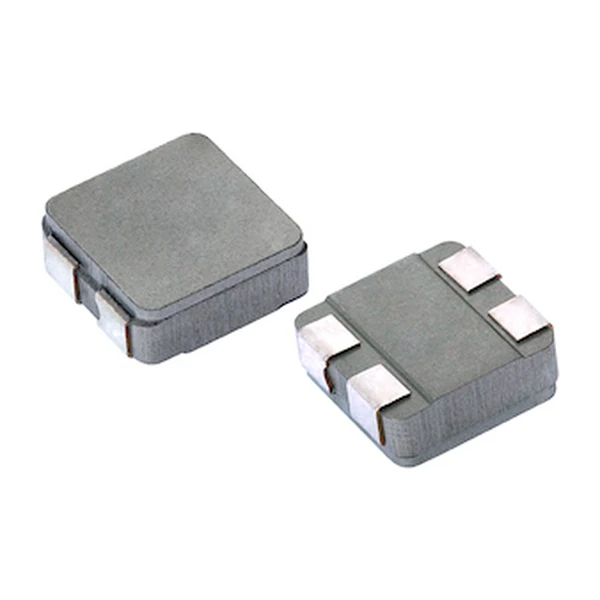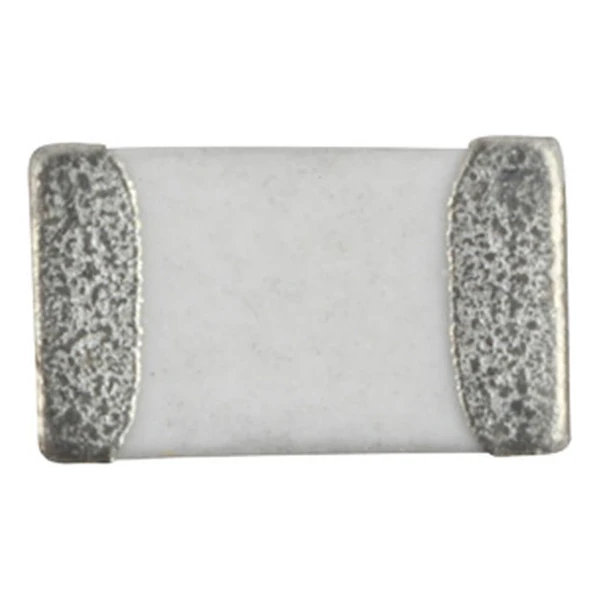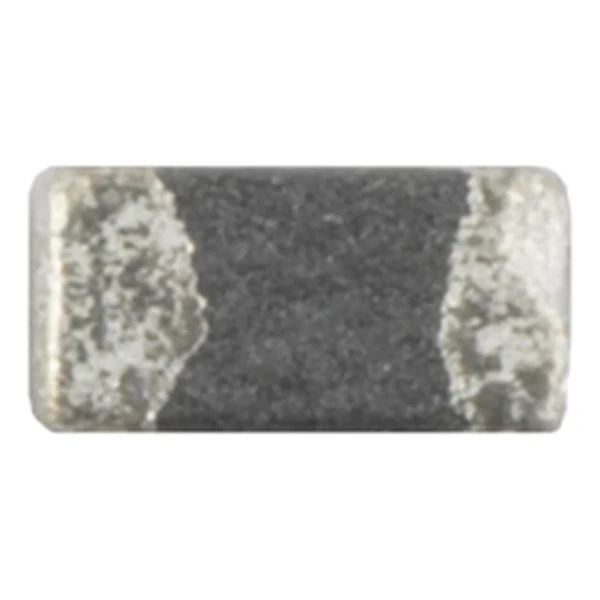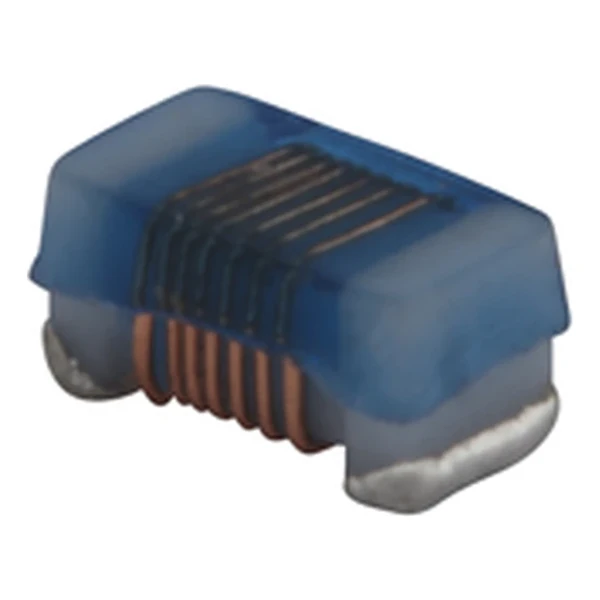
Eaton WCLA2012V1-391-R 390 nH Wire Wound Chip Inductor
- Product Details
- Download
Eaton WCLA2012V1-391-R 390 nH Wire Wound Chip Inductor
Electrical Specifications
| Parameter | Value |
|---|---|
| Orderable part number | WCLA2012V1-391-R |
| OCL | 390 nH ±5% |
| Q minimum @ test frequency | 40 @ 250 MHz |
| SRF minimum | 560 MHz |
| DCR maximum @ +25 °C | 1500 mOhm |
| Rated current (20 °C rise) | 290 mA |
| OCL test frequency | 100 MHz |
| OCL test voltage | 500 mV |
| Package | 2.30 x 1.70 mm, 1.52 mm high |
| Mounting | Surface mount |
| Operating temperature | -40 °C to +125 °C |
| Qualification | AEC-Q200 |
| RoHS | Compliant, -R suffix |
| Data sheet | Eaton Technical Data 10983 |
Dimensions and Pad Layout

Drawing reproduced from Eaton Technical Data 10983: outline views
with rated mm dimensions, pad layout and marking.
The Figures Explained
This is a wire wound chip inductor for RF and small-signal circuits: tight tolerance, defined Q, and a rated current that is set by a 20 °C self-temperature rise rather than by saturation.
At the 290 mA rating the winding drops about 435 mV and dissipates 126 mW. Both are small enough to ignore in a bias network but not in a high-Q filter.
Q of 40 at 250 MHz with self-resonance at 560 MHz puts the useful band comfortably below the point where the winding capacitance takes over.
Within the WCLA2012V1 family this is value 27 of 36, in a range from 2.2 to 2200 nH.
Where This Series Fits
The WCL and WCLA families run from 1.0 nH in a 1.19 x 0.66 mm body to 560 uH in 3.5 x 2.9 mm, with Q quoted at a stated test frequency for every row.
- The rated current is a 20 °C rise figure, not a saturation limit. In a DC bias application check the inductance at the actual bias before sizing the filter.
- Typical applications: adas; infotainment; wireless communications; wifi, bluetooth, satellite; antenna tuning.
- Design note: read Q and SRF at the frequency the part works at, not at the test frequency printed in the table.
Frequently Asked Questions
Is the automotive version electrically different?
The construction is the same; the qualification and the temperature range are not. The WCLA parts are AEC-Q200 qualified and rated to +125 °C, the commercial WCL parts to +85 °C.
Is the automotive version electrically different?
The construction is the same; the qualification and the temperature range are not. The WCLA parts are AEC-Q200 qualified and rated to +125 °C, the commercial WCL parts to +85 °C.
What happens above the self-resonant frequency?
The winding capacitance dominates and the part behaves capacitively. Keep the working band, and the harmonics that carry energy, below SRF.
Shenzhen Gaorunxin Technology Co., Ltd
Online message
Shenzhen Gaorunxin Technology Co., Ltd